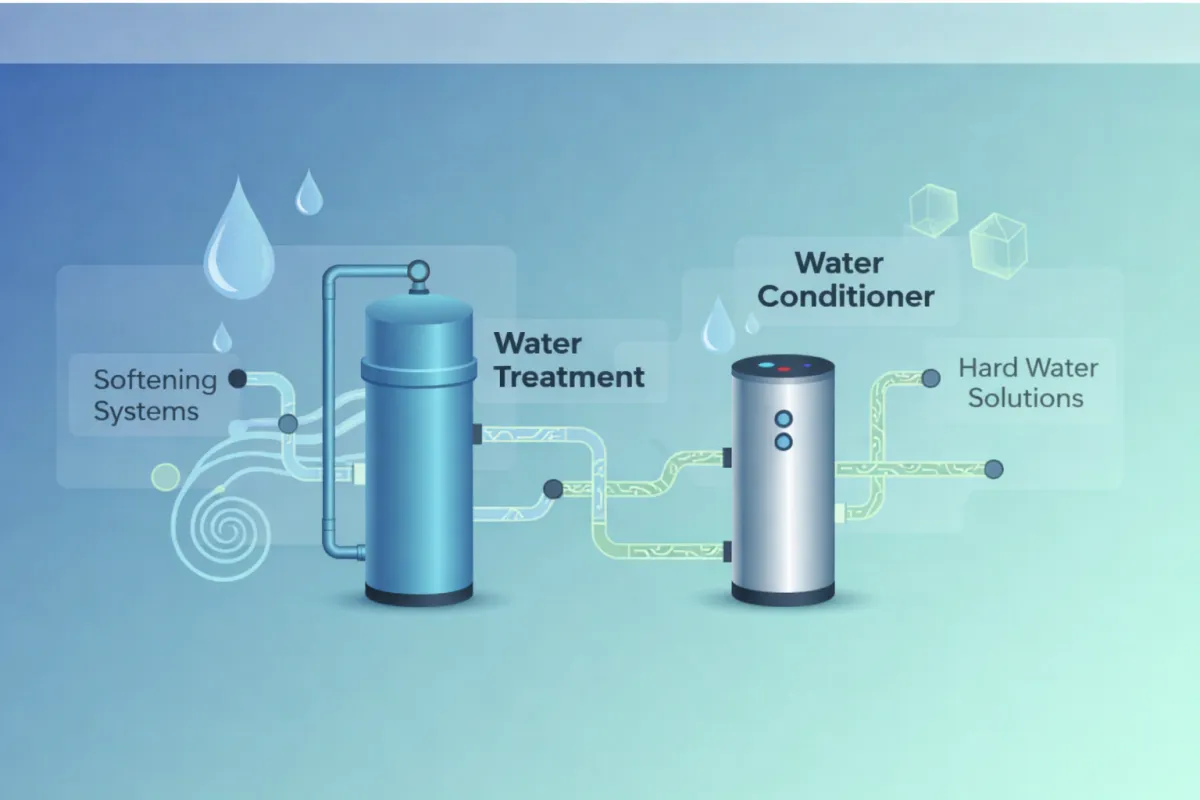
Water Softener vs. Conditioner: Key Differences
Home Water Systems, Water Treatment, Hard Water Solutions
Water Softener vs. Water Conditioner: What’s the Difference?
If you’re tired of spots on your dishes, stiff laundry, and scale buildup on your fixtures, you’ve probably started researching hard water solutions. Very quickly, you’ll run into two popular options: the Water Softener and the Water Conditioner. They sound similar, but they work differently, solve slightly different problems, and fit different homes and priorities. Understanding those differences is the key to choosing the right home water system for your family and budget.
Why Hard Water Is a Problem in the First Place
Before comparing specific water treatment options, it helps to understand what you’re actually trying to fix. Hard water simply means water that has a high concentration of dissolved minerals, mainly calcium and magnesium. These minerals aren’t usually dangerous to drink, but they can be a long-term headache for your home and your wallet.
Scale buildup: Minerals in hard water form crusty deposits inside pipes, water heaters, showerheads, and appliances like dishwashers and washing machines.
Reduced efficiency: Scale makes appliances work harder, increasing energy use and shortening their lifespan.
Cleaning frustrations: Soap doesn’t lather well, leaving soap scum on shower doors, dishes, and sinks, and making laundry feel stiff and dull.
Skin and hair dryness: Hard water can leave a film on your skin and hair, making them feel dry or irritated.
That’s why so many homeowners look for reliable hard water solutions. The two most common types of softening systems are traditional water softeners and newer water conditioners. They both fall under the broad category of water treatment, but they don’t do the same job in the same way.
What Is a Water Softener?
A Water Softener is the classic solution most people think of when they imagine treating hard water. It’s a type of home water system that actually removes hardness minerals from your water, turning “hard” water into “soft” water.
How a Water Softener Works
Most residential water softeners use a process called ion exchange. Inside the softener tank is a bed of tiny resin beads. These beads are charged with sodium or sometimes potassium ions. When hard water flows through the tank, the calcium and magnesium ions in the water are attracted to the resin beads and swapped for sodium or potassium ions.
The result is that the water leaving the tank has had most of its hardness minerals physically removed. It’s truly “soft” in a chemical sense, which makes a big difference in how it behaves in your home water systems and appliances.
Benefits of a Water Softener
Maximum scale protection: Because hardness minerals are removed, you dramatically reduce scale buildup in pipes, heaters, and fixtures.
Better cleaning performance: Soap lathers more easily, dishes come out clearer, and laundry feels softer and brighter.
Smoother skin and hair: Many people notice less dryness and irritation once they start using softened water throughout the home.
Appliance longevity: Water heaters, dishwashers, and washing machines often last longer and run more efficiently with soft water.
Considerations and Maintenance for Water Softeners
Water softeners are powerful softening systems, but they do require some ongoing attention:
You need to keep the brine tank filled with salt (or potassium), which adds a small recurring cost and a bit of lifting and refilling.
The system periodically regenerates, flushing the collected minerals out of the resin and sending salty wastewater down the drain. In some areas, there are restrictions on salt-based water treatment discharge.
Softened water contains a small amount of added sodium, which some homeowners prefer to avoid for drinking water, especially if they’re on low-sodium diets. A separate drinking water filter can address this.
📌 Key Takeaway: A Water Softener is the most thorough hard water solution, physically removing hardness minerals and providing the classic “silky” feel many people associate with truly soft water.
What Is a Water Conditioner?
A Water Conditioner is a different type of water treatment system designed to address some of the same issues as a softener—but it does not actually remove hardness minerals from the water. Instead, it changes the way those minerals behave so they’re less likely to form scale deposits.
How Water Conditioners Work
There are several types of water conditioners on the market, and they often go by names like “salt-free softeners” or “scale control systems.” Common technologies include template-assisted crystallization (TAC), catalytic media, and electronic or magnetic conditioning. While the methods differ, the goal is similar: to alter the structure of hardness minerals so they stay suspended in the water rather than sticking to surfaces.
With TAC systems, for example, the conditioner encourages calcium and magnesium to form microscopic crystals. These crystals don’t adhere easily to pipes and heating elements, which means you see less scale buildup even though the total mineral content of the water hasn’t changed. In other words, a water conditioner is more of a scale management tool than a traditional softening system.
Benefits of a Water Conditioner
No salt or brine: Most water conditioners are salt-free, so there’s no heavy salt bags to buy or brine discharge to worry about.
Low maintenance: Many systems require little more than occasional media replacement, making them appealing for busy households.
Environmentally friendly: Without salt discharge, water conditioners are often viewed as more eco-conscious hard water solutions, especially in regions with strict wastewater regulations.
Minerals remain in the water: If you prefer to keep naturally occurring calcium and magnesium in your drinking water, a conditioner preserves them while still helping protect your plumbing and appliances.
Limitations of Water Conditioners
It’s important to remember that a water conditioner is not the same as a Water Softener. Because it doesn’t remove hardness minerals, you may still notice some differences compared to softened water:
Soap may not lather quite as easily as it does with true soft water, especially in very hard water areas.
You might still see some spotting on glassware and fixtures, though it’s often easier to wipe away because the minerals don’t cling as strongly.
In extremely hard water, a conditioner may reduce but not completely eliminate scale, so expectations should be realistic.
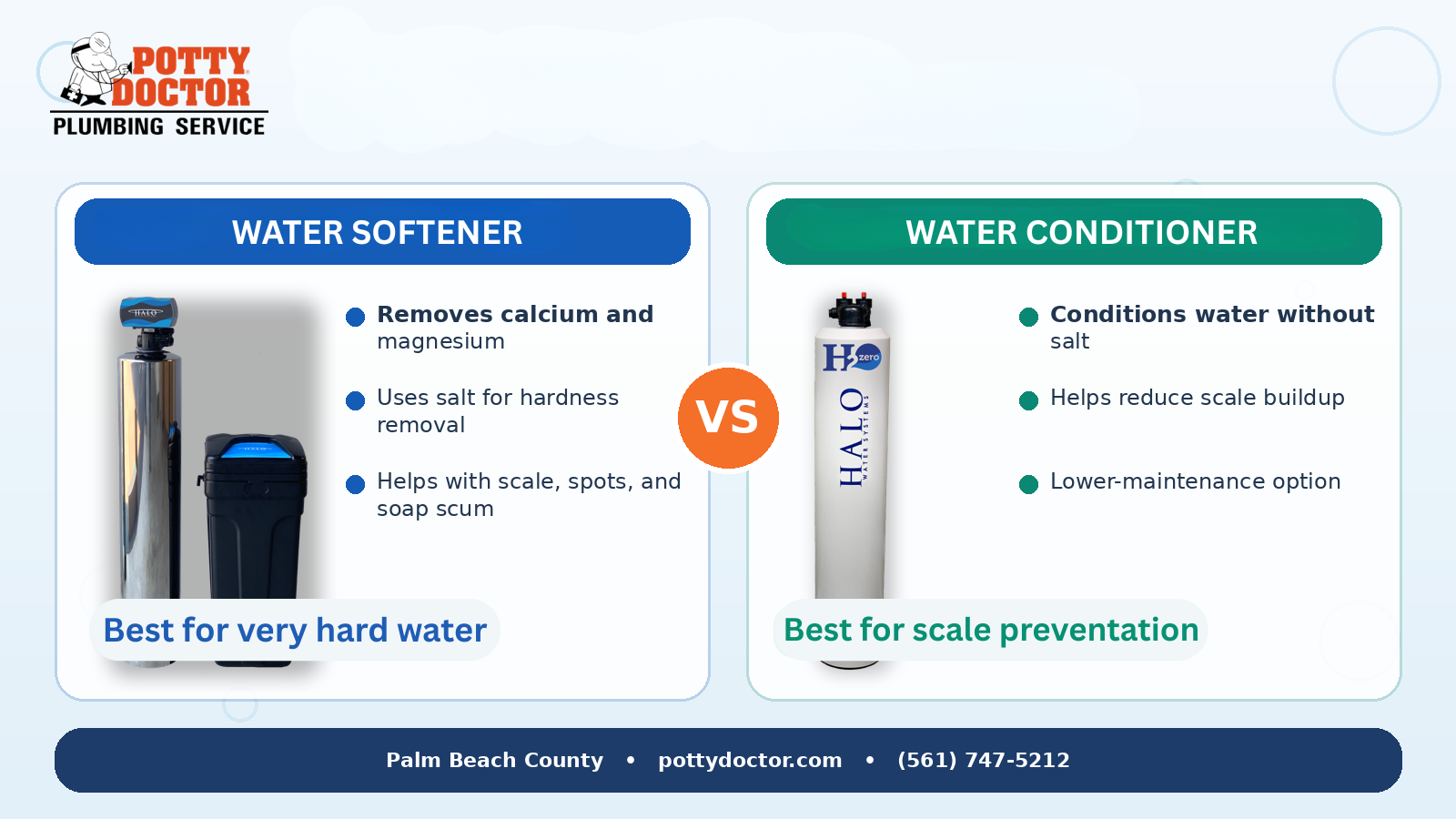
Matching the right water treatment system to your needs prevents unnecessary costs and disappointments.
💡 Pro Tip: When shopping for a Water Conditioner, ask the manufacturer for independent test data that shows how effectively the system reduces scale under conditions similar to your home.
Water Softener vs. Water Conditioner: Key Differences
Feature Water Softener Water Conditioner Main Function Removes hardness minerals Alters minerals to reduce scale Water Feel Classic “silky” soft water Feels closer to original water Salt Usage Requires salt or potassium Typically salt-free Maintenance Regular salt refills, occasional servicing Minimal, media change as needed Best For Very hard water, maximum softness Moderate hardness, low-maintenance scale control
Where Do Other Water Treatment Systems Fit In?
A common misconception is that one device can “do it all” for your home’s water. In reality, home water systems are often designed to solve specific problems. A Water Softener or Water Conditioner focuses primarily on hardness and scale. Other water treatment technologies address different concerns, and they can be combined with softening systems for complete protection.
Whole-house filters: These systems remove sediment, chlorine, and certain chemicals to improve taste, odor, and clarity, but they don’t usually tackle hardness on their own.
Reverse osmosis (RO): Often installed at a single tap, RO units provide highly purified drinking water by removing a wide range of contaminants, including minerals and dissolved solids.
Disinfection systems: UV lights or chemical disinfectants target microorganisms like bacteria and viruses, which are unrelated to water hardness.
When planning hard water solutions, it’s wise to think of your water treatment setup as a layered system. A Water Softener or Water Conditioner manages scale and hardness, while filters, RO units, and disinfection systems handle other quality concerns. Together, they form a customized suite of home water systems tailored to your local water and your family’s priorities.
How to Choose Between a Water Softener and a Water Conditioner
1. Test Your Water Hardness
The first step in any water treatment decision is understanding your starting point. You can buy an inexpensive test kit or request a water analysis from a local professional. Hardness is often measured in grains per gallon (gpg) or milligrams per liter (mg/L).
Soft: 0–3.5 gpg
Moderately hard: 3.5–7 gpg
Hard: 7–10.5 gpg
Very hard: over 10.5 gpg
In moderately hard water, a quality Water Conditioner may offer enough protection with minimal maintenance. In very hard water, however, a full Water Softener is often the more reliable long-term solution.
2. Clarify Your Priorities
Different households value different benefits from their home water systems. Ask yourself:
Is your main goal to protect expensive appliances and plumbing from scale, or do you also want that luxurious soft-water feel on skin and hair?
Are you comfortable carrying and refilling salt bags, or would you prefer a “set it and forget it” system with minimal upkeep?
Do you have local regulations or environmental concerns that make salt-based water treatment less attractive?
If you want the most complete softening experience and are willing to handle a bit of maintenance, a Water Softener is probably the better fit. If low maintenance and salt-free operation are top priorities, a Water Conditioner may be an appealing alternative hard water solution.
3. Consider Your Plumbing and Space
Both water softeners and water conditioners are usually installed at the point where water enters the home. You’ll need enough space for the unit itself, as well as a nearby drain and power source in many cases. Some compact conditioners are easier to fit into tight utility rooms or crawlspaces, which can influence your choice of home water system.
4. Work with a Trusted Professional
While it’s helpful to understand the basics of water softeners, conditioners, and other water treatment options, a qualified water specialist can test your water, review your plumbing, and recommend a tailored solution. They can also explain how different softening systems will perform with your specific hardness level and household water use.
📌 Key Takeaway: There is no one-size-fits-all answer. The best hard water solution is the one that balances your water quality, lifestyle, budget, and local regulations.
Bringing It All Together: The Right Hard Water Solution for You
When you’re comparing a Water Softener to a Water Conditioner, you’re really deciding between two different philosophies of water treatment. A softener takes a direct, traditional approach: it removes hardness minerals to give you fully softened water throughout your home. A conditioner takes a more subtle route, changing how minerals behave so they cause less trouble, while leaving them in the water.
Both technologies can play a valuable role in modern home water systems. The key is to match the system to your water hardness, your expectations, and the way you use water every day. For some households, the rich lather, spotless dishes, and softer laundry that come with a full Water Softener are worth the salt refills and regeneration cycles. For others, the simple, salt-free operation of a Water Conditioner offers enough scale control with less hands-on upkeep.
Ultimately, hard water solutions are an investment in your home and your comfort. Taking the time to understand your options—how each softening system works, what it does best, and where its limits lie—will help you choose a water treatment setup you’ll be happy with for years to come. With the right combination of Water Softener or Water Conditioner and supporting filters, you can protect your plumbing, improve daily tasks like cleaning and bathing, and enjoy consistently better water from every tap in your home.
If you’re ready to take the next step, the HALO Water System is available through Potty Doctor, giving you access to a professionally installed, whole-home solution tailored to your water quality and usage.

